Dienstag, 10. April 2018

Another perspective on the Swiss orienteering re-run experiment


This is a follow-up article to a much more interesting article about the re-run

The 5000m on track is a steady component of the Swiss Team Selection races. It offers a standardized view on the runners athletic capacities.  How can we transfer the findings to the orienteering field? Below you can see a result of the re-run experiment by Swiss Orienteering.

This years selection series where opened with 5000m track race. Two days later the Sprint race was held in Novaggio. The after-noon the same day, they held a re-run along the mornings course. The athletes were allowed to visit the terrain after their own sprint race, before, after some good regeneration and analysis, running the same course for a second time.

fig.1. Running times Men for 5000m Track, Re-run and race. Top five runners are emphasized.
(Dark blue = M.Kyburz, red = D.Hubmann, yellow = F.Howald, green = C.Meier, light blue = Florian Schneider)

Trivia: Both D.Hubmann and M.Kyburz, ran the re-run at the exact same times as the 5000m... (Hubmann "bomfri")

What can you see here? - The first step is from the track to the (urban) terrain. There we have those, able to more or less keeping the speed, while others relatively struggle. In the second step you can see that those able to hold the level while navigating remain in front, while the rest drops to the back. So in the end the most adapted, outbalanced end up on the top, with the exception of M.Kyburz. He is just as fast that even a common "navigation"-drop leaves him in the top five.

edit:

Freitag, 3. November 2017

The Swiss Team towards EOC at homeground - Selection history 1999-2018

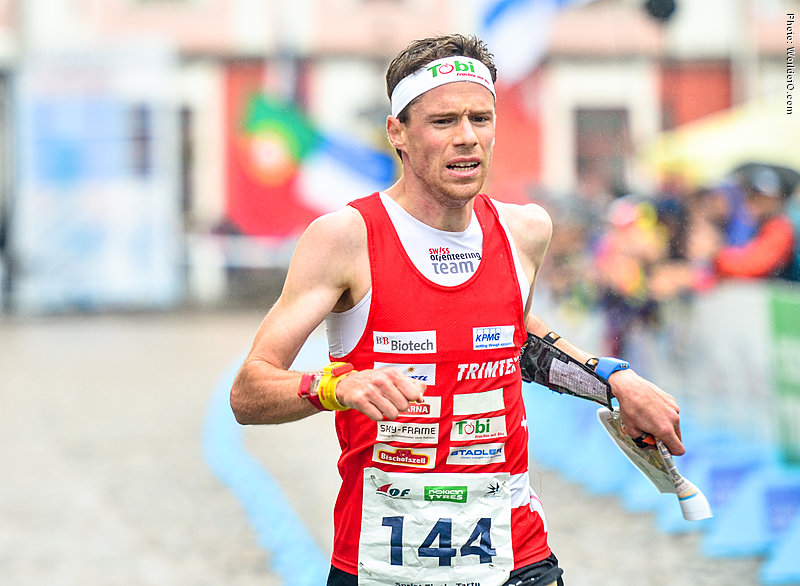
fig.1. Daniel Hubmann on his way to his 18th season for the Swiss National Team, and of course going strong as always. (Image provided by worldofo.com and taken from Daniels athlete profile)

The Swiss Team communicated the selections for the Teams of 2018.
Elite National Teams
Junior National Teams
Only a half year before the EOC 2018 in Switzerland, the big goal for many Swiss Athletes, we see only few changes on the level of the Elite Team.

Women:
A-Team: Judith Wyder, Sabine Hauswirth, Elena Roos and Julia Gross stay in place but Sarina Jenzer got relegated to the B -Team.
 U-23:  Sina Tommer continues to the B-Team (due to reasons of age). Former Juniors Sofie Bachmann and Valerie Aebischer build the new U-23.
B-Team: Annina Brunner, Lisa Holer, Martina Ruch, Paula Gross and Hanna Müller remain, Sarina Jenzer and Sina Tommer change over (got somehow relegated) from other Teams. Sandrine Müller and Lisa Schubnell dropped out. Kerstin Ullmann retired
Juniors:  Simona Aebersold, Marcia Mürner, Saskia Bruchmüller, Elena Pezzati, Siri Nyfeler remain. Elisa Bertozzi, Katja Brütsch, Eliane Deininger, Anja Probst and Siri Suter got selected for the first time. Debora Stadler and Katrin Müller dropped out due to reasons of age.

Men:
A-Team: No changes. Hertner, Howald, 2x Hubmann, 2x Kyburz ( Indeed A-Team initials promise a bright future for Joey H. and Sven H. :-)
U-23: Thomas Curiger continues, Joey Hadorn advances from the Juniors Team. Jonas Egger and Sven Hellmüller got relegated to the B-Team.
B-Team: Tobia Pezzati, Noah Zbinden, Simon Dubach, Riccardo Rancan, Florian Schneider and Christoph Meier remain. Jonas Egger and Sven Hellmüller come from the U-23. Pascal Buchs comes from the Juniors. Andreas Rüedlinger (after 10 years) and Térence Risse dropped out.
Juniors: Andrin Gründler, Timo Suter, Silvan Ullmann, Nicola Müller, Chamel Zbinden and Tino Polsini remain. Reto Egger, Marius Kaiser, Fabian Aebersold and Mattia Gründler got their first selections. Joey Hadorn (U-23) and Pascal Buchs (B) took the next step. Nick Gebert and Florian Attinger dropped out due to reasons of age. Oreste Garbani dropped out.


I updated my Swiss National Team history. You find it here. This year I thought, I would answer the following question: Being selected for the Swiss Team for the first time. How long can you expect the party going on? - But I have to admit, that the data collected is not sufficient for the purpose to answer this question. While only covering 20 seasons many of the long careers are not covered either at the beginning or have not reached their ends yet (Daniel Hubmann is entering his 18th season as National Team Member in 2018) . So the answer is as rough as "between 1 and 18 years, maybe."

Some questions that instead might be answered (based on the material presented above) are:
Q: How many percent of the Juniors make it to the Elite National Team?
A: Women: 42 % directly,  3.6% later (f.ex. Elena Roos), 2.4% of the Elite National Team never were member of the Junior National Team.
Men: 39.6% directly, 4% later (but career never lasted longer than 2 seasons).

Montag, 7. November 2016

Swiss Team Selections 2017

As Swiss Orienteering got more detailed on the changes in both the National Team as the National Junior Team it is no longer necessary to go into details (just they missed to mention that Florian Schneider changed to the B-Team as he no longer counts as U-23).

But I updated my overview table on the Swiss Team since 1999.

As this years detail I choose the number of years in the B-Team.There Andreas Rüedlinger screens an impressing stamina. He got selected for the tenth season as a member of the B-Team... Note that the average number of seasons for men selected for the team is actually 3 seasons, while the median is as low as 2 seasons.

So here the top ten men:
1. Andreas Rüedlinger 10 ong.
2. Raffael Huber 8
3. Andreas Müller 7
-. Benno Schuler 7
5. Christian Ott 5
-. Dominik Koch 5
6. Christoph Meier 4 ong.
-. Marc Lauenstein 4
-. Andreas Kyburz 4
-. Severin Howald 4
-. Alain Denzler 4

At the women side there is no one in sight to challenge Angela Wilds  leading position, with only Lisa Holer in an ongoing series of 3 seasons. Here the average number of seasons is 3.4 and the median is 3 seasons.

1. Angela Wild 10
2. Franziska Wolleb 7
-. Caroline Cejka 7
4. Ines Brodmann 6
-. Sara Lüscher 6
6. Rahel Friederich 5
-. Bettina Aebi 5
7. Lea Wegmüller 3
-. Lea Müller 3
-. Noemi Cerny 3
-. Sara Würmli 3
-. Judith Wyder 3
-. Lilly Gross 3
-. Sophie Tritschler 3
-. Lisa Holer 3 ong.

Mittwoch, 5. Oktober 2016

Make long distance great again

If I was the GOD of Orienteering, I would make two  changes in regard of the long distance at WOC. These just to make the long distance the epic it deserves to be. Runners for the podium shall be allowed to show their best performance uninfluenced by other runners. Pack running is not part of the game. Indeed it is its spoiler.
fig.1. WOC 2016 winner Olav Lundanes at the run in. Followed by Daniel Hubmann (3rd) and Matthias Kyburz (7th). (photo: Jan Kocbach, worldofo.com)
fig.2. Tove Alexandersson (1st) and Anne Margrethe Hausken Nordberg (3rd). In the background Sabine Hauswirth (10th) and Mari Fasting (7th).  (photo: WOC2016)


1) Folded starting field

If TV production really needs a 2 min. start interval, I would stick with the WRE-ranking to define start order but would fold  the starting field in half.

So instead of:
10 9 8 7 6 5 4 3 2 1
There will be
5 6 7 4 8 3 9 2 10 1

That way the weakest runner work as buffers between the strongest and the runners going for the medals have a reasonable 4 min start interval...

2) Bonus Sprint

Then I would skip all sorts of butterflies but introduce a simple situate separator method called "bonus sprint".

This bonus sprint just separates the pack leader from the pack. The pack riders are sent to a minor running loop (without map) to give the pack leader a reasonable head-start. Meanwhile the pack riders get the estimated time the running loop takes withdrawn from their running time. (So: if they run to slow, they loose time. If fast the win some seconds; method described here)
So easy, Göran Andersson.  Wasn't it?

Mittwoch, 18. Mai 2016

Mappers Blog: Locator- and Basemaps Zürichberg

Here is a glympse on the locator-and basemaps I composed for the coming project, a revision of Zürichberg (fig.1.). As the relief is generally unspectacular, I will not be able to use the micro-contour relief (fig.2-3) as an location-tool. So I hope vegetation height (fig.4) and conifers (fig.5) will do the trick. 
fig.1 The old map from 2008.
fig.2. ... a relief ...
fig.3. ... the contours 1.25m ...
fig.4. ... the clearings ...
fig.5. ... and finally the conifers.

Figures 3-5 are pngs with transparencies, thus can be used combined.


o-zeugs over and out (late wc china finding)

Yes. Let the o-zeugs blog rest in peace. I´ll take it down eventually. And yes, I stumbled over the decisions of the Ethics Panel regarding ...