Mittwoch, 3. April 2013

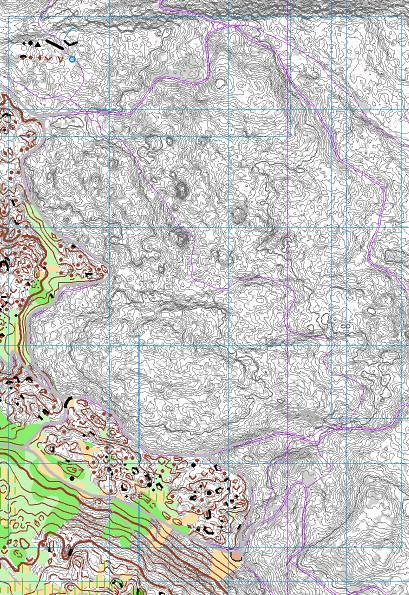
Mappers Blog: Base for mapping Uaul Grond

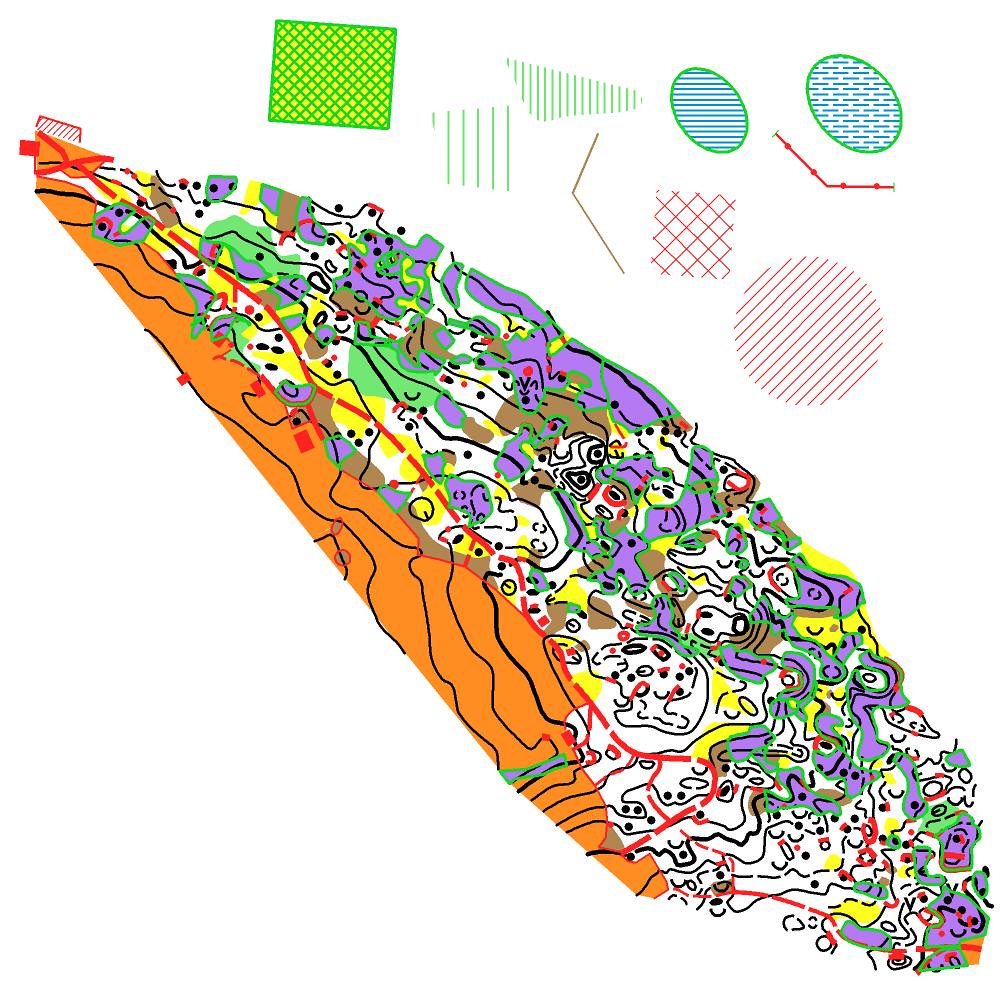
I am leaving for Switzerland for some weeks. The Hemfosa project will rest until the snow has melted away. Instead I will be mapping a part of the Uaul Grond, by the way my favorite part of my favorite forest (Uaul la Teua and Uaul la Crusch). Here I share  a sample of my base map with you.
fig.1. Basemap for mapping Uaul la Teua

Some details:
  • The base map itself bases on Laserdata, offical measurement data (violet), older maps and actual maps alongside.
  • As the terrain is very detailed  I am mapping 1:3500 for a 1:10K map to get some space for clean drawing. The less detailed part I map in 1:5K as usual. I try to keep the base map as decent as possible, so I print it out in grey-scale.
  • As the terrain is complex the contourlines are provided with slopelines. Equidistance is 1m.
  • The vegetation information (available from OCAD11, alt. Karttapullautin) I reduced to this grey surfaces in the background (grey means: No high or intermediate trees).
  • Some size-reference objects in the upper left corner
  • the blue mesh for referencing the field notes
  • the other blue lines to organize the overlap of the different sheets
  • violet: data from official measurents, but the laser data is expected to be more precise
  • the bordering track of the existing map in the lower left corner is set to grey in case it has to be adapted
  • Additionally I will carry with me a print of the  map from 2000 mapped by Gian-Reto Schaad, Urs Steiner and Beat Imhof. I guess I can always learn from them.


Montag, 1. April 2013

Mappers Blog: Cleaning up a map from 1994

As I wrote earlier, the Hemfosa map is a high quality map in regard of the mapping but has sincere deficits in regard of the drawing in OCAD.  Additionally there are some things that have changed in the ISOM respectively the Swedish Mapping Norm. It is when one tries to implement these changes efficiently one notices the drawing deficits.

Tuning up the map took the following actions.
  • Update Symbol numbers
  • Eliminate wrong symbolizations
  • Update Colors & Symbols
  • Rubbersheet the map to the new Reference System SWEREF99TM and adding new magnetic north lines
  • Implement the Swedish Mapping Norm minimal measures
Update Symbol Numbers
One basic idea of an OCAD-map is that each geometric object is linked to  its symbolisation by a symbol number (as the symbol is linked to a color by a color number). If this linking is done properly a change in a map specification can be implemented by just importing the new norms and colors into the existing map file (OCAD10>Karte>Farben und Symbole laden von ...). This though won't work if the Symbol Numbers have changed between the last and the actual norm as in this case. I actually went through each symbol and made sure that the according symbol number is up-to-date. For the next change in the ISOM one might imagine the national federations provided their mappers with a CRT-file (a textfile with the key translation) to be used at the import of the next ISOM reference file (OCAD10>Karte>Farben und Symbole laden von ...> checkbox CRT-Datei verwenden)

 Eliminate wrong symbolisations
fig.1. Not linked to the right symbol.

In the Hemfosa map there are bascially two kinds of wrong symbolisations. The first is rather easy to detect. That is if symbols outside the map norm are used as in fig.1. Here the task is to identify the right symbolisation and to relink these objects with it. (OCAD10>Legende[rechtsklick]>Selektieren nach Symbol; Legende~[linksklick auf das richtige Symbol]; OCAD10>Bearbeiten>Symbol wechseln).

The other basic case is, when the wrong symbol of the map norm was used. For example 416 cultivation boundary to draw 516 powerline. To detect those I linked certain symbols to other colors.
fig.2. 104 Slopeline and 103 formline in magenta and wrong symbolization for the formline plus slopeline in the middle of the picture fig.3.

That way I corrected most of the bugs of the drawing (f.ex. replacing 1100 wrong symbolized  elongated knolls). Only the re-drawing of countless formlines, which can not be reproduced with the regular symbol i renounced to. At least I grouped them to a separate symbol and marked that one as "non-map-norm"-symbol.
fig.3. Non-map-norm symbols marked red.


Update Colors and Symbols to ISOM2000
After this basic clean up I can proceed to the update. There I import symbols and colors from a reference file.  OCAD10>Karte>Farben und Symbole laden von ...&gt

By the way. There is another useful function to get an overview where all the difference between a map file and a reference file is written into a text file. OCAD10>Karte>Symbole und Farben vergleichen ...

Rubbersheeting the map to the new referenence system SWEREF99TM
First I set the maps coordinate system to SWEREF99TM and set the center coordinates somewhere around the maps center (OCAD10>Karte>Massstab und Koordinatensystem; fig.4). 
fig.4. New coordinate system and map center

Then I choose a number of clearly identifiable points on the map an read out their coordinates (I did it form kartor.eniro.se, but of course using laser data would be the more precise solution). I draw cross-hairs at the points where the map is and where it should be (for the latter I use the tool Nummerischer Modus; fig.5).
 fig.5. Reference Points for rubber-sheeting

With these points I calculate the rubber-sheeting (don't choose to may points, to close together; OCAD10>Karte>Karte transformieren>Rubbersheeting funktion; sample see fig.6).

fig.6. Visualization of a maps rubber sheeting with OCAD10 applied to a regular mesh (Map Söderby-Tumba).

Magnetic North Lines
Other than in Switzerland or Norway where maps are orientated to magnetic north, the swedish map norm says, that a map should be orientated according to the reference system SWEREF99TM. Therefore the magnetic north-lines are not parallel to the map border. To calculate the angle of these lines I have to consider magnetic declination and meridian convergence (see factsheet in german). The lines I draw with the function OCAD10>Karte>Gitterlinien where I can choose the magnetic lines angle (here -2.1).

Minimal measures
After the change of the symbolisation and the rubbersheeting it is time for the last step. The control of minimal sizes and distances. For that I modify the map symbols adding rings visualizing the minimal distances between objects according to the map norm.

fig.7-8. Visualization of minimal measures according to the swedish map norm. Magenta rings should not touch one another. Yellow rings should not touch other objects with the same color.

To enhance maps readability I divide objects being drawn to close together. As another visual control I have loaded the same map with other colors into the background. So I can check how far I dislocate the map objects (fig.9.).
fig.9. Visualized dislocation of map objects due to readability enhancement (red in the background is the primal location).  In the upper left corner a virtual gap in a contour.

The dislocation usually less than 4m is  pretty acceptable.


Finally and in the same turn I also correct other part of the drawing by adding corner points, map points as cutting virtual gaps into contour lines and distinct vegetation borders (OCAD10>Tool Schere & Ctrl & Click & Ziehen; see fig.9.)

So far I invested 46 hours in this process so far but ain't finished yet.
Samstag, 30. März 2013

Mappers Blog: Jiří Daněk 8-color-scheme for his field notes

As I am collecting field notes from as many different mappers as possible (send me yours (incl. map name, 10x10cm original size field note, corresponding map clip, map name, as comments to your drawing philosphy; mlerjen@ubol.ch) and on the same time I am preparing for something, I thought I would do in about 10 years (Mapping the heart of Uaul Grond!; most eastern part on the map) Jiří Daněk shared to me the 8-color-scheme he follows to make his field notes.

To get a visual idea how his color scheme would turn out at the Uaul Grond map I downloaded Swiss Orienteerings ISOM2000 1:10K Reference file and modified it according to Jiřís scheme. If you want to try it just download this ISOM2000 1:10K Reference File (Fieldnote, Colors& Symbols J.Daněk) (OCAD9), then open a OCAD map similar to the map you are going to map and then load colors and symbols from the file just downloaded (OCAD10>Karte>Farben und Symbole laden von); if you get to many error messages it could be about time to clean up ;-)).

For the Uaul Grond project, I tried this out with that part I mapped for the Swiss O Week 2011 Training Map Crestasee which is acutally bordering the current project.
fig.1. Part of the map Crestasee according to ISOM2000.

fig. 2. Same map visualized with the field note set according to Jiří Daněk. Additionally he uses very thin green and purple for the construction. Blue characters to qualify roads and tracks. If the terrain is very rocky he also uses two colors for the rocks (passable and not passable).

fig.3. Sample of Jiří Daněks field notes from Vastanaberget, Skåne, Sweden, Year 2000.

What do you think? How would your field notes look like? I invite you to translate your own field note symbol set in the similar way as I did and send it to me. I will publish it.

Mittwoch, 27. März 2013

Mappers Blog: Hemfosa map history

Prehistory of the current map
based on Lars Palmqvists Map Archive

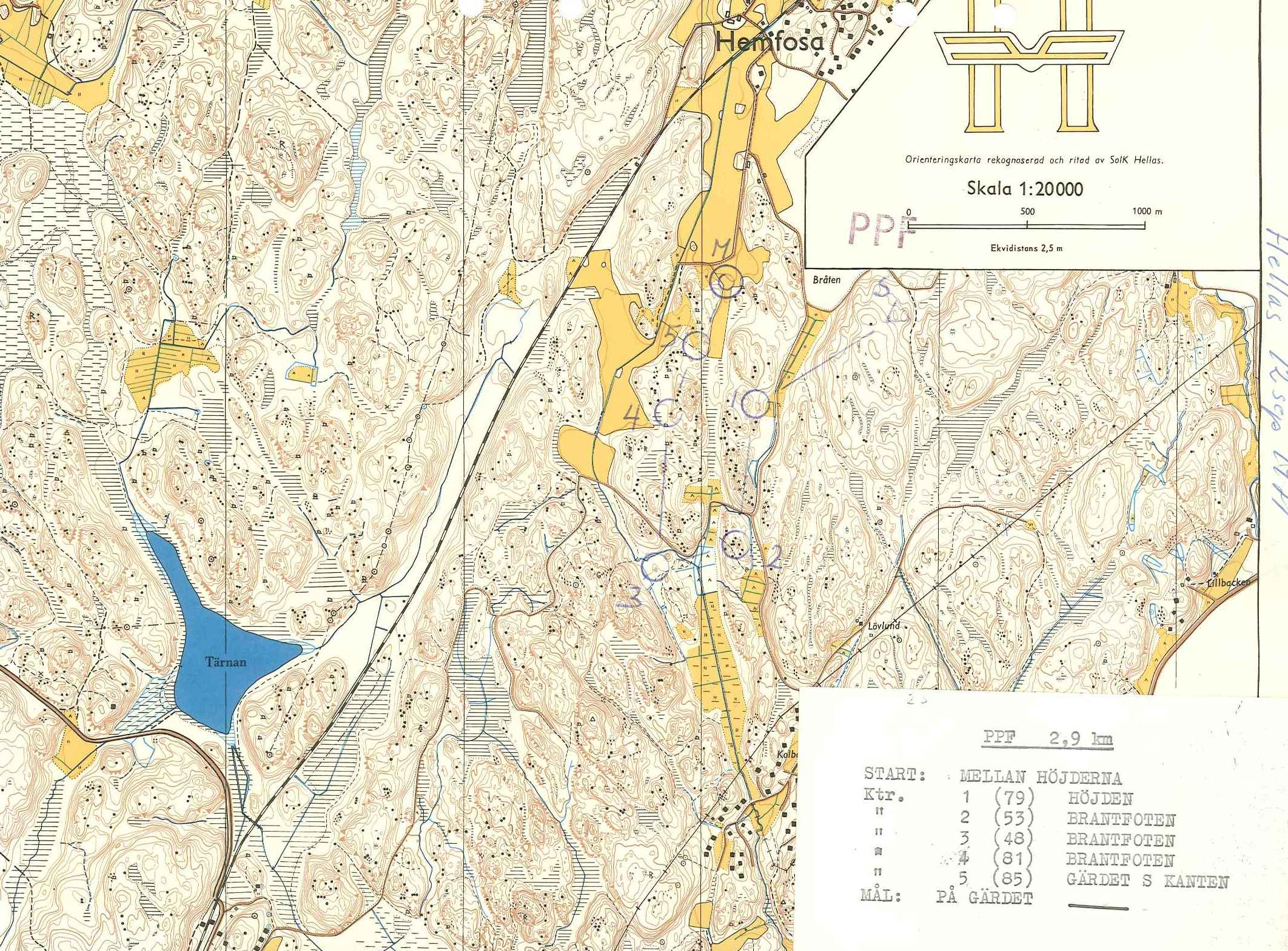
The area I am working today was first mapped before 1971 in a scale of 1:20'000 and 2.5m intervall by SoIK Hellas (no single authors mentioned).
 
fig.1. 1971

The map itself did not follow any international standard.

In 1977 a new map according to ISOM1975 with its new palette of runnability signatures (yellow and green) appeared.
fig.2. 1977 (southern part)

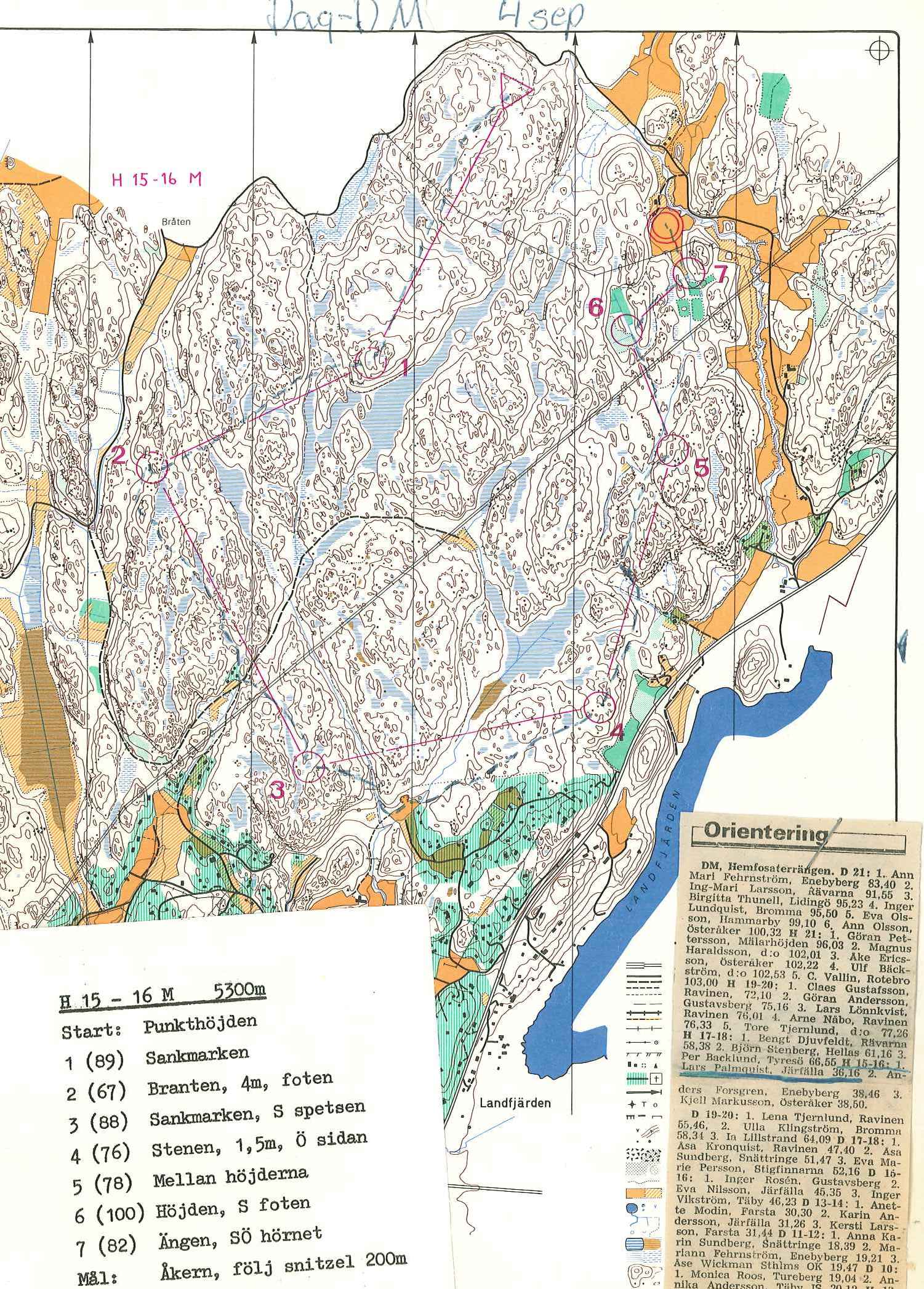
1981 a new map again. It seems the 1977 was revised and more standardized signatures (f.ex. rock faces) where applied.
fig.3.1981 (northern part)

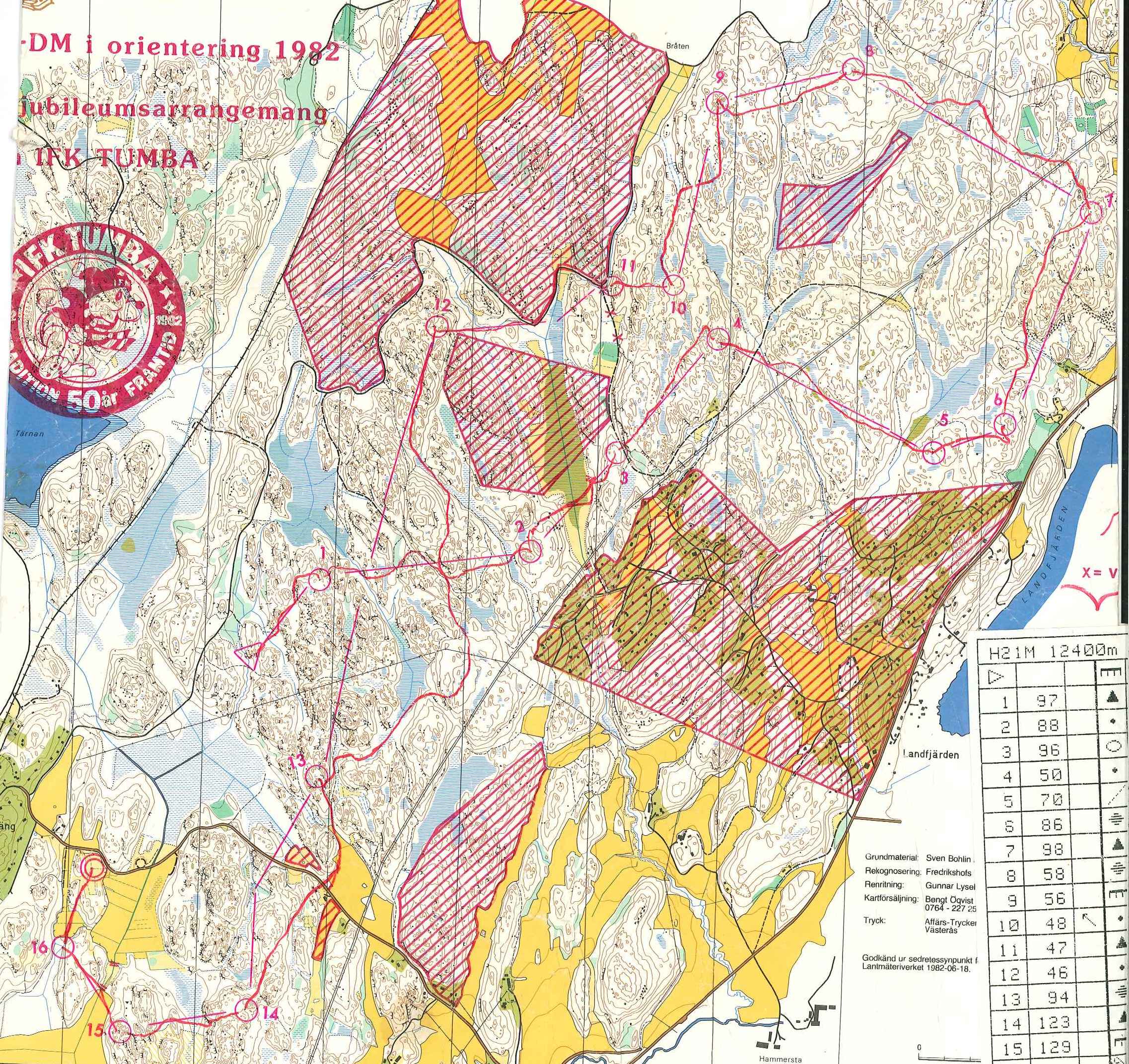
And already in 1982 the next revision with once more standardized signatures (f.ex. single tracks; ISOM 1982?). Here we get for the first time a glimpse on the authors: Basematerial: Sven Bohlin, Fieldwork: Fredrikshofs [IF, Tyresö], Drawing: Gunnar Lysel[l]
fig.4. 1982 (southern part).

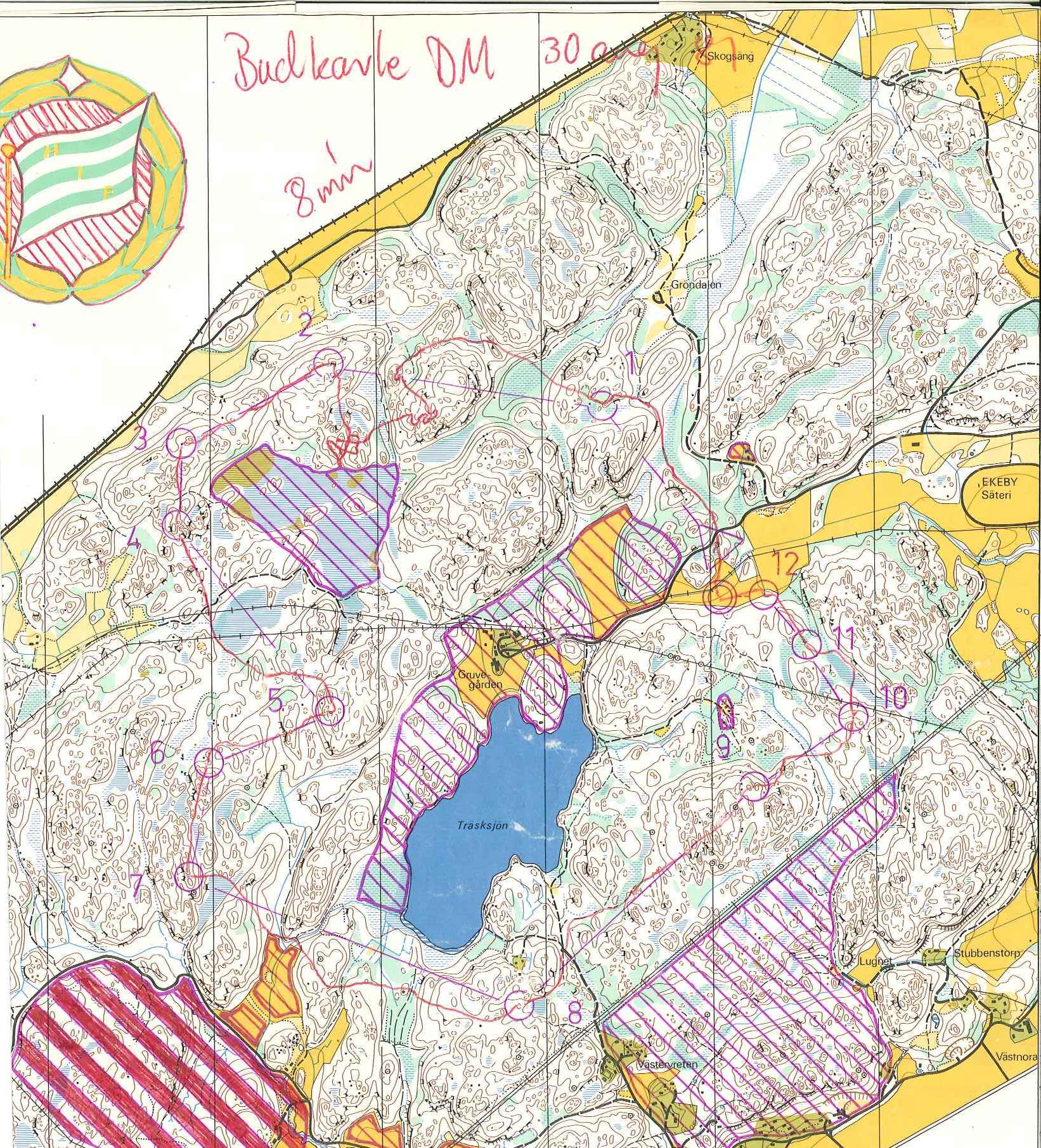
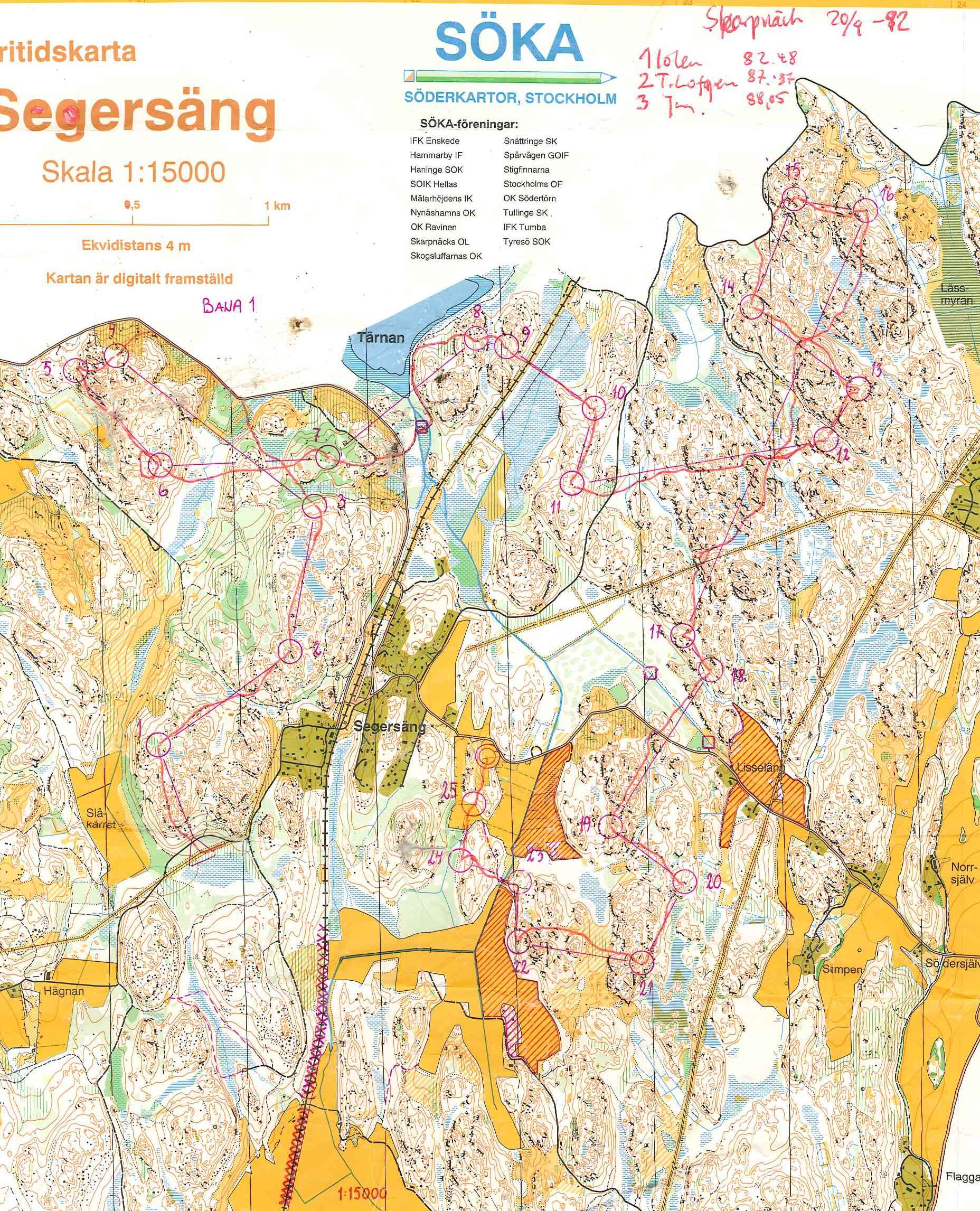
Then in 1992 a new map, according to ISOM 1990 (the green stripes ISOM) and "digitally produced". This map was sort of a pre-map to the later SM-map. Parts of this map also appear in the latter being produced 1993-1994.
fig.5. 1992 (southern part)

History of the current map
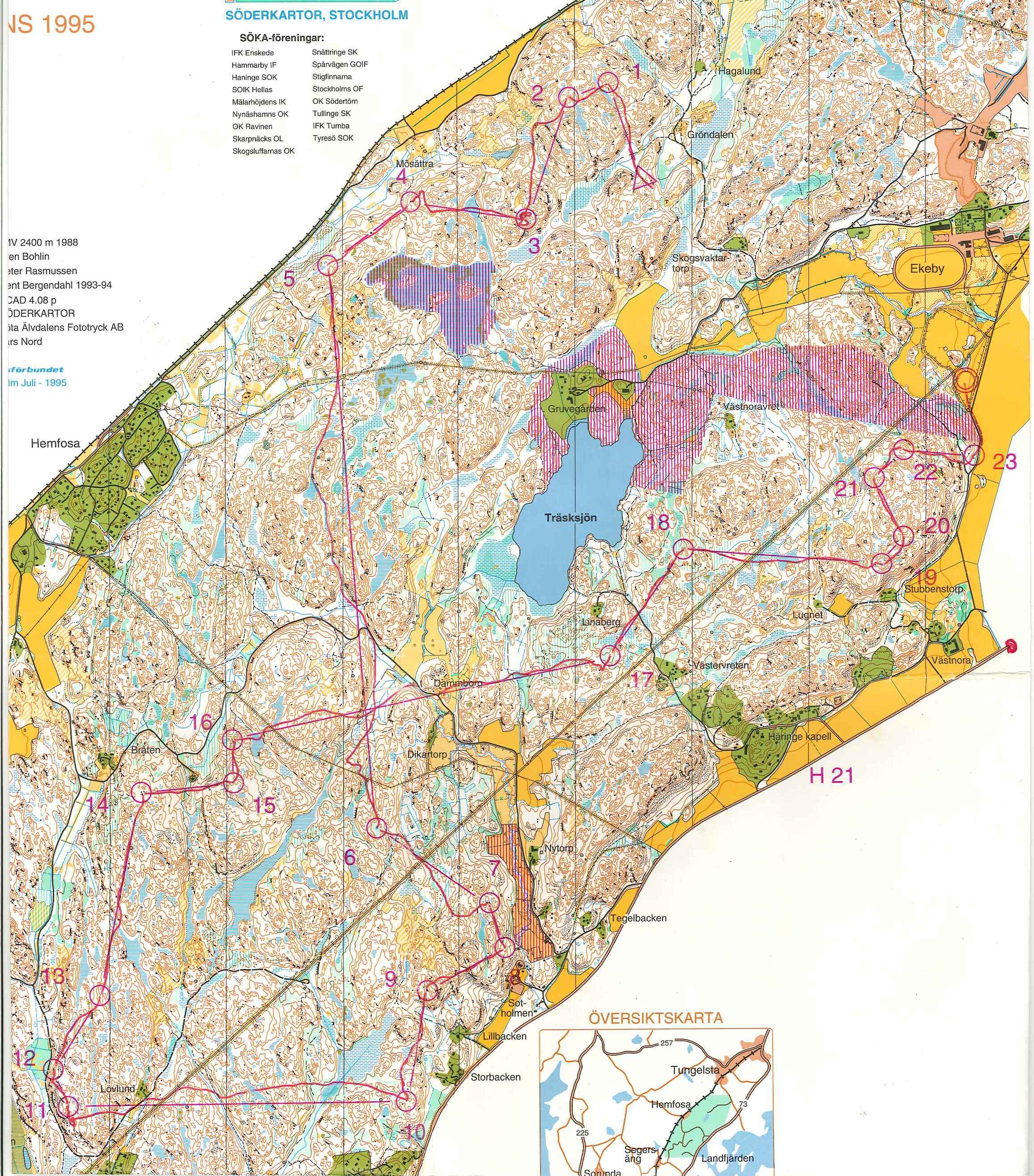
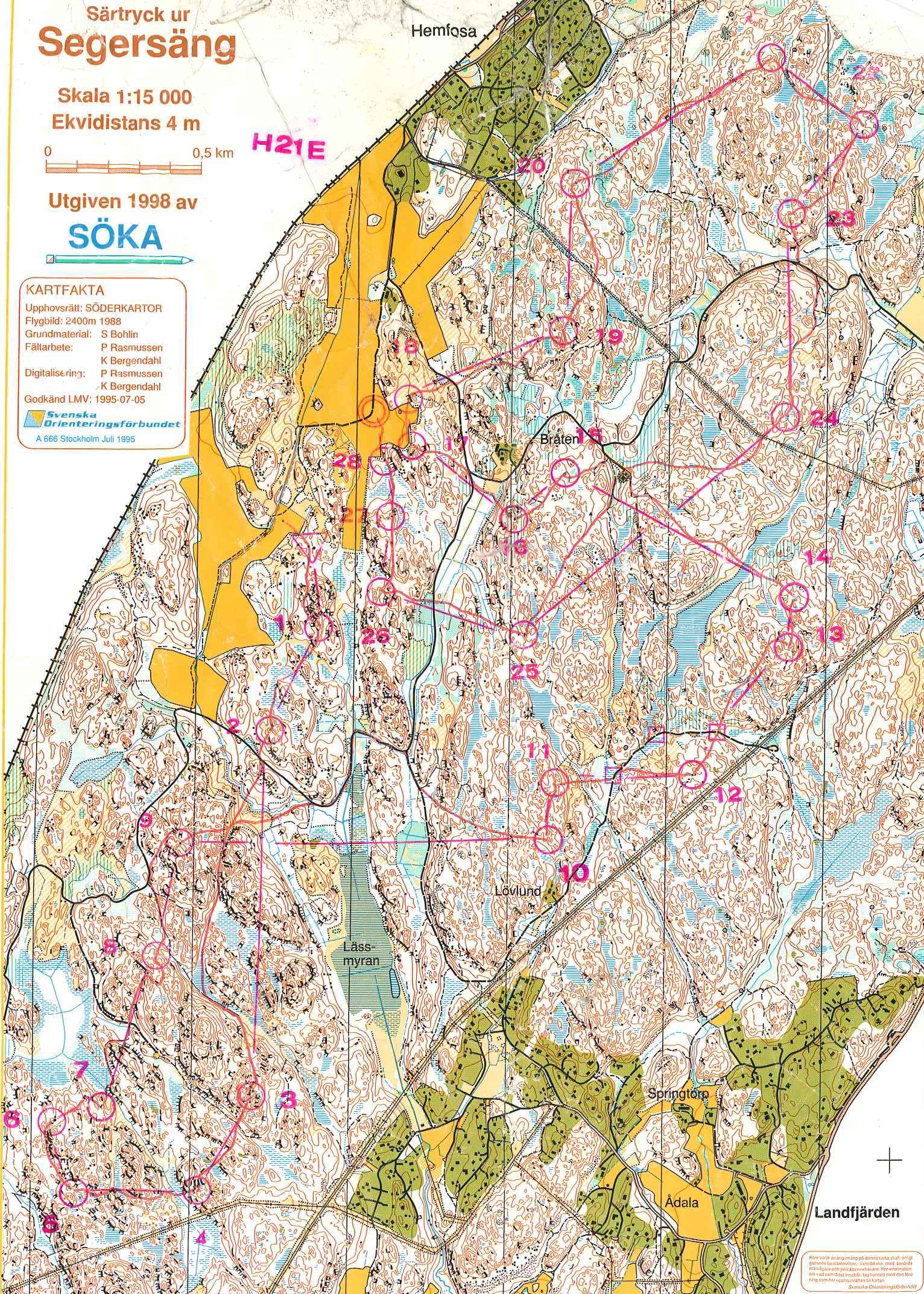
In 1993-1994 the map I am revising was produced for the Swedish Long Distance Championships. The map was based on Sven Bohlins Base-Material he extracted from airborne images (2400m) from 1988. Peter Rasmussen did the fieldwork. Kent Bergendahl the digitization with OCAD 4.0p (on later excerpts of the map Bergendahl was also credited for fieldwork as Rasmussen for digitization and finally only Bergendahl was mentioned).

fig.7. 1995 (center part)
  • The map was according to the ISOM 1990 and of outstanding quality mostly in regard of the relief interpretation (based on airborne image combined with a very experienced interpreter, Sven Bohlin). This is probably a quality we have a hard time to reach due the luxury of the airborne laser data.
  • The drawing instead has from the todays point of view some weak points.
    • OCAD 4.0p did probably not support bezier-curves, so everthing had to be drawn "dotted". This makes the file very unhandy for revisions.
    • The whole map seems to be "thought from the airborne image". Everything was more or less placed  disregarding symbol sizes as, minimal distances between objects. This has negative impacts on the maps readability.
    • Due to the primacy of the base-material and probably some limitations of OCAD 4 objects like 103 form line where not drawn with their according symbol but every single dash with 101 contour. Similar for 307 minor water channel. Also other object like 104 slope line, 515 railway, 516 powerline, 512 footbridge, 312 well  where drawn with non-according symbols. This makes the file unhandy for revisions of map specifications.
fig.8. Single dash 101 instead of 103.

This map was revised by  Bertil Lundkvist in 2006 and thereby adapted the ISOM 2000 (the elongated knoll revision).
fig.9. 2006 (northern part)

In regard of the map broadly merited Lundkvist did a good job. In regard of the drawing he
  • continued "dotting"
  • added  new missymbolisations like filling small hills drawn with 101 contour which should according to ISOM2000 be converted to 113 elongated knoll with dots of 117 broken ground  or 112 small knoll instead.  Therby he avoided to introduce the minimal measures for small knolls.
fig.10. Detail: Elongated knolls drawn als 101 contour line filled with 101 contour line.

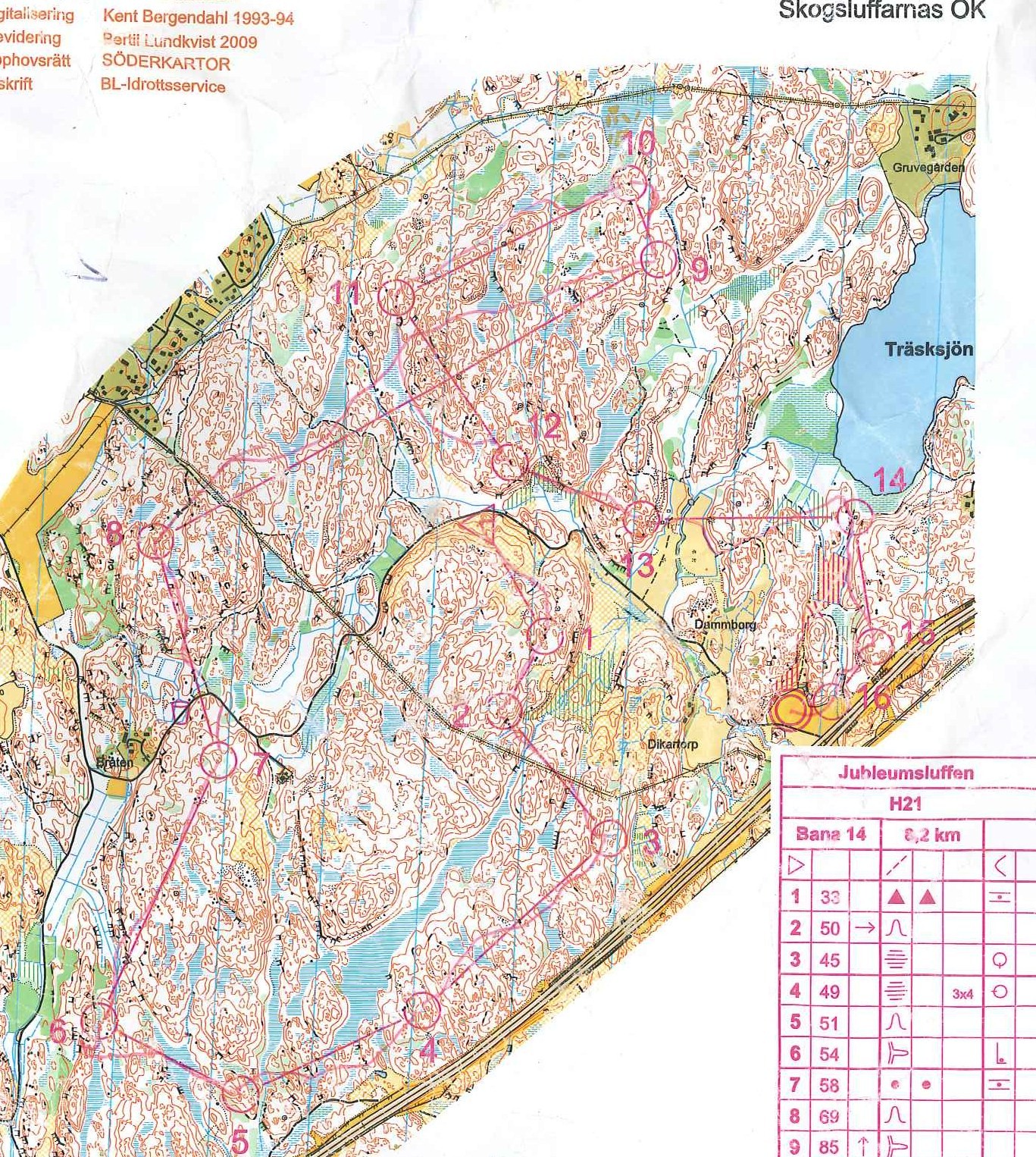
Lundkvist revised the map once again in 2009 as a new motorway crossing the forest was build. This revision seems to have been strictly limited to the necessary, leaving obvious lacks outside these limits.
fig.11. 2009

Summary
The map has a long history and the maps basic quality is very high.

The maintenance of the drawing is nowadays a crucial task to a mapper, and a clients investment into the maps future. Therefore the drawing should be enhanced.

Then, the readability should be enhanced by pushing through the existing minimal measures and minimal gaps.

And of course,  it is time for a smooth revision...

Freitag, 22. März 2013

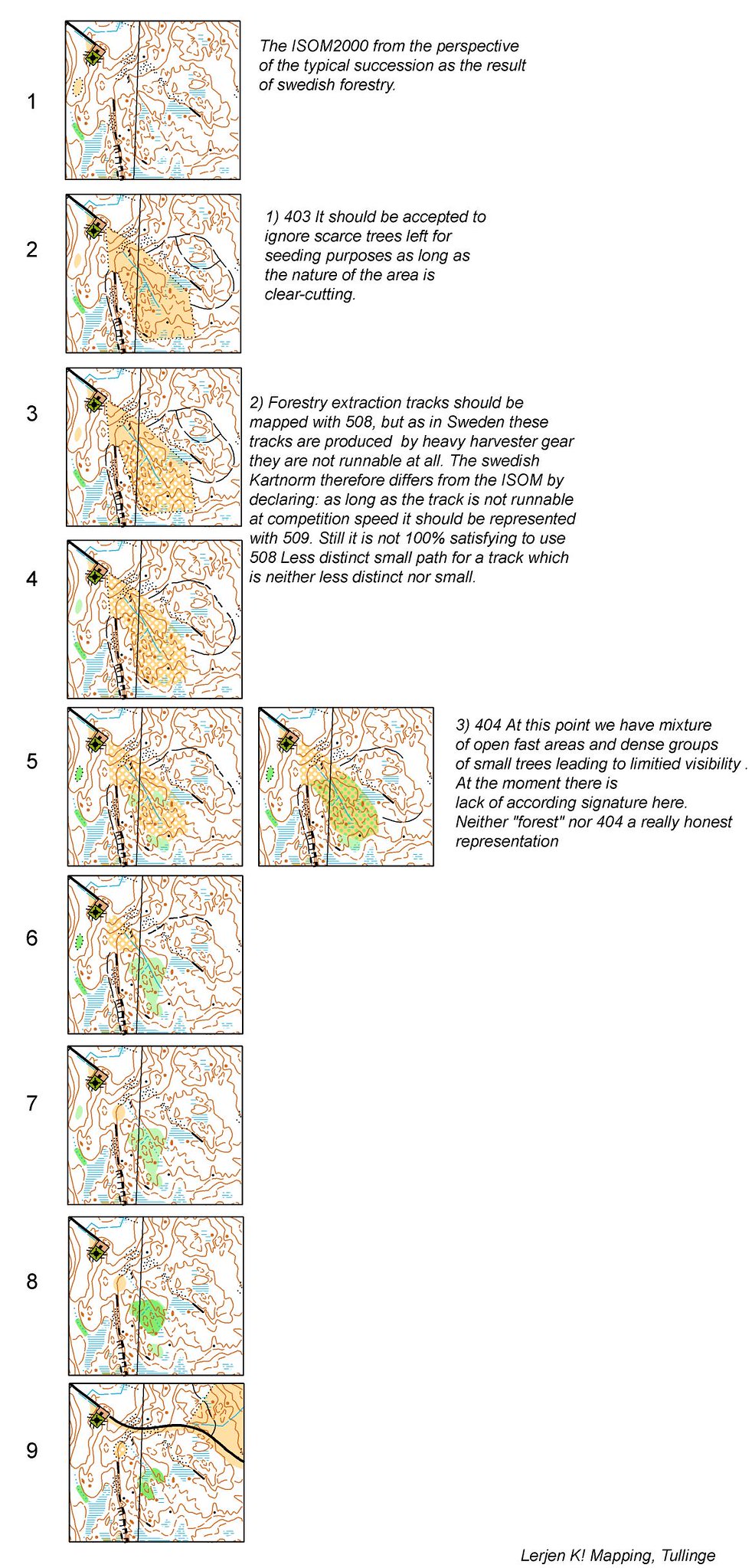
Mappers Blog: ISOM2000 from the perspective of the typical succession as result of swedish forestry


Added 27.03.2013: As you can see here, the next ISOM is about to solve my problems with narrow rides as the semi-open terrain.(Page 19 & 20)

fig.1  Stage 2. Rather fresh result of a swedish-style clear-cutting. From the perspective that the map is a piece of graphical communication I would prefer map this as 403, even though there are a small number of trees here.

During my Hemfosa-Project I noticed, that I mainly have to deal with two kinds of forest, which are natural forest (naturskog) and cultivated forest (kulturskog). Where natural forest is mainly "white" or predictable, the cultivated forest leading to complex green patterns is the harder job. Forest in Sweden is mainly cultivated in two forms nowadays: clear-cutting bigger areas and harvester-rides. Earlier  they also cultivated plantation, but this seems not anymore. As these two main-usages are applied for quite a while I saw different stages of a the typical succession from these two forms and put it together from the perspective of the ISOM2000.
There are three points I am reguarly struggling joining swedish forestry with the ISOM2000. See my comments in graph.

fig.2 Typical succesion as a result of swedish forestry

fig.3. Stage 5
fig.4. Less distinct small path?


Dienstag, 19. März 2013

Montag, 18. März 2013

Mappers Blog: Aufnahme im Gelände

Als Kartierungsgrundlage verwende ich die Karte Stand zwischen 1995 und 2009 versehen  mit einem Netz zum einfachen einpassen bei der Reinzeichnung (OCAD>Karte>Gitterlinen). Für die Karte habe ich versucht der Karte einerseits Farben neu zuzuteilen, die einen grossen Kontrast zu den von mir verwendeten Stiften bilden, andererseits muss das Symbol des Objektes noch identifizierbar sein (Kuppe oder grosser Stein?; OCAD>Datei>speichern unter [hemfosa_baskarta.ocd]; OCAD>Karte>Farben).

Die Grundlage drucke ich im Massstab 1:7500 (Zielkarte 1:15000) auf Papier. Dann klebe ich dieses auf eine 2mm starke Plexiglasplatte und überziehe es mit einem selbstklebendem Zeichungsfilm (genaue Typenbezeichnung folgt, zu kaufen gibt es den bei der Materialstelle des SOLV)

Die Plexiglasplatte ist eigentlich zu dünn, insbesondere im Winter, da sie mit den Handschuhen gehalten werden muss. Die ersten Tage habe ich darum jeweils zum Schluss Schmerzen an der linken Schulter.

Feldmaterial vom ersten Tag: Proviant, Sonnenschutz, Karte 2009 1:15K, Telefon, Geld, Zeichungsgrundlage, Minenbleistifte mit Brusthalfter (eben erst den Tschechen abgeguckt), Ersazmaterial, Kompass, GPS Garmin Oregon (zu mitteln von Referenzpunkten zur Georeferenzierung der Karte), GPS Garmin Forerunner 205 (zur Aufzeichnung meiner Wege).
Detail: Brusthalfter (Prototyp)
Detail: Druckbleistifte mit Pentel und Staedler Farbminen 0.5mm (Ich arbeite primär mit rot, gelb, grün und schwarz/Bleistift.
Auf geht es. Leichte Winterschuhe (Timberland), Gamaschen (Mammut), warme Fingerhandschuhe (Black Diamond), leichte Skihosen (killy), Faserpelz (HH), Gore-Tex-Jacke (Moonstone), Sonnenbrille (Bolle), Mütze (Icebreaker) und Rucksack (Black Diamond).
Feldperspektive.
Feldaufnahme vom ersten Tag. Es ist ein Wiedereinstieg. Ich merke beim zeichnen, dass ich viel nicht eindeutig gezeichnet  habe (gezeichnet -> geändert ->geändert->unlesbar). Das wiederum wirkt sich negativ auf das flüssige Arbeiten an der Reinzeichnung aus. Mit Blick auf Jiris sauberen Zeichnungsstil nehme ich vor mich dahingehend zu verbessern (nur definitives zeichnen, bzw. Änderungen mittels Gummi und Abdeckstift direkt vor Ort klarzustellen).

Mappers Blog: Schneelage Anfang März 2013

Der Winter war auch hier in Stockholm ungewöhnlich schneereich, so dass auch weiterhin gut 20cm Schnee im Laufgebiet liegt. Weil ich nun nicht mehr länger zuwarten kann, revidiere ich nun trotz Schnee.

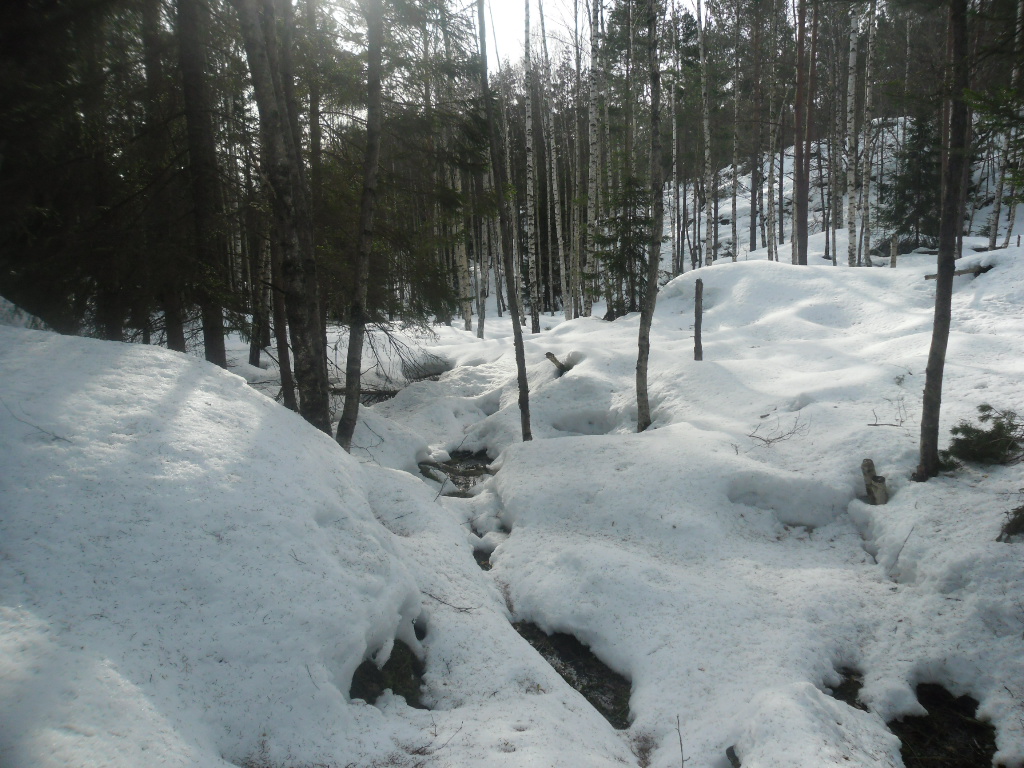
Die Grobrevision der Vegetationskartierung kann ich dabei gut vornehmen, die Beurteilung der Traktorschneisen und Wege (Bilder 3 und 4)  ist dagegen schwierig.

Es zeigt sich, dass die herrschenden Verhältnisse nicht übel sind, da der Schnee über Nacht immer wieder einen zumindest teilweise tragenden Deckel friert.


Donnerstag, 14. März 2013

Mappers Blog: Der Auftrag


Ende November 2012 treffe ich mich mit zwei Vertretern des Kartenzusammenschlusses SöKa (Söder Kartor) an welchem alle Vereine angeschlossen sind, die in der Region südlich von Stockholm OL-Karten besitzen. SöKa bewirtschaftet diese Karten zentral.

Ich soll im Hinblick auf zwei Wettkämpfe Ende April 2013 einen 11km2 Auschnitt der Karte Hemfosa, ein Gebiet rund 30km südlich von Stockholm, grob überarbeiten. Das ganze läuft unter dem Begriff der ytrevidering und wird mit 8-10h/km2 veranschlagt.
En modern digitaliserad karta av god kvalitet kan leva längre med enbart ytrevidering. Yttrevidering innebär att man tittar över  alla gröna ytor, lägger in nya hyggen, kontrollerar åkrar och ängar och ser över stigsystemet. Den svåraste delen i detta är att göra en jämn redovisning av de gröna ytorna. Ytrevidering kan med fördel läggas ut på duktiga orienterare som är mindre rutinerade som kartritare. Det är viktigt att vi upprätthåller en viss kartritarkompetens i klubbarna.
Dazu kommt der Auftrag, die Karte an die neue schwedische Kartennorm (plusminus die schwedische Übersetzung der ISOM2007) anzupassen und auf das geltende schwedische Koordinatensystem SWEREF99TM anzupassen.
SOFT-Kartnorm.

Dazu gibt es die lokale SöKa Interpretation der Kartennorm  mit zu berücksichtigen.
SöKa-Kartpolicy.

Da in Schweden das Gros der Aufnehmer Profis sind, habe ich im Hinblick auf diesen Auftrag bei den schwedischen Behörden (Skatteverket) eine Einzelfirma im Arbeitsbereich SNI-Kod 71129 angemeldet. Als ein in Schweden unbeschriebenes Blatt beginne ich mit einem Stundenansatz von 300 SEK /ca.43CHF. Ausgewiesene Kartografen bekommen Ansätze bis 400 SEK.

Werden in der Regel die aufgewendeten Stunden ausbezahlt, so vereinbare ich mit SöKa ausnahmsweise einen fixen Beitrag.

Im später stellt sich heraus, dass die Karte 1994 zwar nach höchstem Standard aufgenommen wurde (dazu separater Artikel), die Zeichnung mit damals OCAD 4 aber nicht moderen Standards entspricht, die Symbolsierung und Minimalabstände nicht der aktuellen Kartennorm entsprechen. Ich bekomme darum im Verlauf des Winters den Zusatz-Auftrag die Zeichnung zu bereinigen (dazu separater Artikel).

Vor Annahme eines Revisions-Auftrages das OCAD File auf die Zeichenqualität hin beurteilen. Dazu die Kartengeschichte klären (je länger die Karte nicht revidiert wurde, desto grösser der Aufwand).

Mittwoch, 13. März 2013

Mappers Blog: Intro (Nachtrag)

Jiří Daněk hat meinen o-zeugs Eintrag vom letzten Freitag gelesen und hat mir diese drei Bilder geschickt. Cool!
Abb.1. Brusthalter für Zeichenmaterial mit Nackengurt und Brustgurt.

Abb.2. Feldmaterial: Plattenkompass Silva Type 4/54, zwei verschiedene Zeichenplatten, Distanzmesser ATN Ranger Eye 800 , Höhenmesser Suunto E203 , Höhenmesser Silva Altimeter, Brusthalter mit Minenstiften und Radiergummi, Ersatzminen Pentel Color Leads 0.5mm.

Abb.3. Zeichenplatten

Dank an Jiří

Freitag, 8. März 2013

Mappers Blog 01: Intro

Für mich als Kartografen sind Bilder wie das von Ales Hejnas Kindern auf seiner Facebook-Seite oder eines von Jiří Daněks Setup auf dem Portuguese Orienteering Blog etwas spannendes, verraten sie doch einiges über die praktische Erfahrung  zweier Profis der Szene (Welche Stifte, wie aufbewahrt, was für Platten inkl. Material und Plattengrösse).

Da ich selber gerne mehr praktisches über das kartieren von OL Karten lesen möchte, habe ich mir vorgenommen selber damit anzufangen und mein erstes internationales Projekt etwas genauer zu dokumentieren. Zum Anfang aber etwas schnüsiges.

Abb.1. Kinder von Kartografen lieben Nacht-OL auf selbstgezeichneten Grundstückskarten.
Abb.2. Grundstückstkarte BV41, Scool-Sybmolsatz ergänzt mit Symbolen für Blumenbeet, Vogelhaus, Schaukel, Briefkasten und Komposthaufen.

o-zeugs over and out (late wc china finding)

Yes. Let the o-zeugs blog rest in peace. I´ll take it down eventually. And yes, I stumbled over the decisions of the Ethics Panel regarding ...